Home / Journal / TikTok Lab Diamonds
A Note From Our Founder
TikTok Lab Diamonds Are Selling for $1. Here's What That Really Means.
October 9, 2026 · By Dylan Pung, Founder of Lihara
Over the past few months, countless people have come to me with lab diamonds they won in TikTok auctions, asking what they actually bought and what to do with it. So I looked into it. Here's what I found, and my tips for navigating this shift.
It's 11 p.m. and a TikTok live stream is moving diamonds faster than most jewelry stores move them in a month. A host holds a loose stone up to a ring light, the counter starts at $1, and ten seconds later it's sold to someone scrolling in bed. Then the next one. Then the next.
I'm a third-generation jeweler. I grew up spending a lot of time in my family's office, watching the side of this business most people never see: wholesale, manufacturing, and the stones moving between them. So when these auctions took off, my reaction wasn't surprise. It was recognition. What looks like a new trend is really the end point of something the trade has watched happen for years.
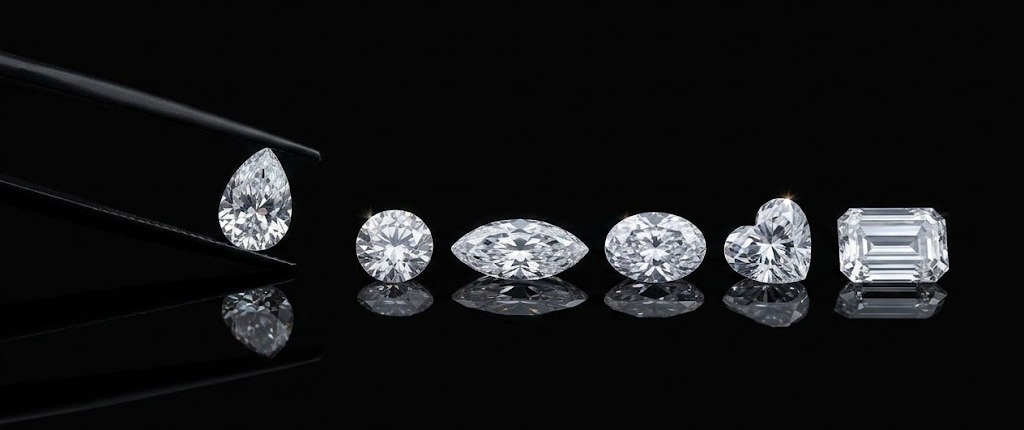
How a Diamond Ends Up in a Ten-Second Auction
Live diamond auctions have exploded on TikTok Shop this year. Bidding windows run 10 to 15 seconds, and reporting on the trend puts lab diamonds in these auctions at roughly $100 to $200 a carat, with most sales between $100 and $500. It's riding a much bigger wave: TikTok Shop sold an estimated $50.3 billion worldwide in the first half of 2026, up 92% on the year before, and US live shopping is on track for close to $20 billion this year, according to The Hustle.
The reason diamonds work in this format is simple. They got cheap. Lab-grown diamonds are now grown at industrial scale, and supply has outrun almost everyone's expectations. The clearest sign came from the biggest name in diamonds. When De Beers launched its lab-grown brand, Lightbox, in 2018, it priced stones at $800 a carat, a price designed to look cheap next to mined diamonds. In May 2025, De Beers announced it was shutting Lightbox down, as lab-grown wholesale prices had fallen by around 90%. A stone that once anchored a $800-a-carat brand now opens at a dollar.
Demand Didn't Disappear. It Moved.
It would be easy to read all this as lab diamonds losing their shine. The numbers say the opposite. In The Knot's 2026 Real Weddings Study, 61% of engagement rings bought by US couples married in 2025 had a lab-grown center stone, up from just over half the year before. Couples aren't walking away from lab diamonds. They're buying bigger ones, and they're getting much less precious about where they buy them.
That's the real shift TikTok is showing us. The stone has become a commodity. And when the stone is a commodity, the value moves somewhere else: to how well it's cut, to whether it's what it claims to be, and to the ring it ends up in.
What a $1 Opening Bid Doesn't Tell You
Here's what ten seconds under a ring light hides.
Cut. Two lab diamonds with identical carat, color and clarity can look completely different. A stone cut too deep holds weight but loses brilliance and looks smaller face-up than its carat suggests. Cut is where cheap stones most often fall short, and it's the hardest thing to judge on a phone screen. As jewelry industry expert Kim Shaul put it in coverage of the trend, fast-paced auctions and bright lighting can mask a stone's flaws: you can get a fantastic deal on a loose stone, or a really poor one.
Treatment. Many lab diamonds are treated after they're grown to improve their color. That isn't a scandal, but it's information. IGI reports note whether a stone shows signs of post-growth treatment, and you should know which one you have.
The report itself. Since October 1, 2025, GIA no longer gives lab-grown diamonds the familiar color and clarity grades. Its new reports describe a stone as "premium" or "standard", because so many lab diamonds now fall in a narrow band of high grades. IGI still grades them on the full 4Cs. Either way, a report is the floor, not the ceiling. It doesn't tell you how a stone actually sparkles.
My Tips If You Won One
- Verify the report. Look up the report number on the grading lab's website and make sure every detail matches what you were sold.
- Find the inscription. IGI laser-inscribes lab-grown diamonds with "LG" and the report number on the girdle. A jeweler can read it under magnification in a minute.
- Test it properly. Basic diamond testers measure heat conductivity, and moissanite can pass them. Ask for a moissanite or multi-tester, which tells the two apart.
- Look for chips. Check the edges and corners under magnification. Small chips matter, because prongs press right where they sit.
- Get the exact measurements. Length, width and depth in millimeters. Whoever makes your setting will build it around those numbers.
The Ring Is Now the Expensive Part
This is the part TikTok buyers are discovering after the auction ends. When a 2-carat stone costs a few hundred dollars, the setting often costs more than the diamond. Gold prices are high, and a good setting takes real metal, real design and a skilled setter.
It's also where the most important decisions are. A setting should be made for one stone: its shape, its size, its depth. A large stone needs heavier prongs than a small one. An oval or a pear looks completely different set north-south or east-west. The metal changes the color of the stone next to it. Get this right and a $300 diamond can look like it belongs in a ring that cost ten times as much. Get it wrong and no stone will save it.
So, Is This a Good Thing?
Mostly, yes. For generations a two- or three-carat diamond was out of reach for almost everyone. Now it isn't, and I think that's a good thing for the people buying rings. But the auctions also reward speed over judgment. Sales are often final, it's easy to buy more than you meant to, and lab diamonds aren't an investment you can sell later. Treat a lab diamond like what it is: a beautiful stone to wear, not an asset to trade.
My advice is to spend your attention where the value now lives. Buy the stone with care, verify it, and then put real thought into the ring.
Not Sure What to Do With Your Lab Diamond?
That's exactly why Lihara Studio lets you design around a stone you already own. At Lihara we design and make engagement rings and fine jewelry to order, and we can build a setting for your diamond.
- Design it in 3D. In Lihara Studio, choose a setting, select I have a stone, and enter the measurements from your grading report. You'll see your ring in 3D, in the metal you choose.
- Get a quote. Send your design and our team replies within two business days with renderings and a quote. Nothing is charged until you approve.
- We handle the rest. We send a prepaid, insured shipping label, inspect your stone when it arrives, make your setting, set the stone and ship the finished ring back to you insured.
Rather talk it through? Book a consultation and we'll help you decide what your stone should become.
Design a setting for your stone
Frequently Asked Questions
Are TikTok Shop lab diamond auctions legit?
Many sellers are real businesses selling real lab-grown diamonds, often with IGI reports. But the format rewards speed over inspection, sales are often final, and quality varies a lot from stone to stone. Buy from sellers who show the grading report before you bid, and verify the report number on the lab's website after.
Should I buy a lab diamond on TikTok Shop?
If you know what you're looking for, you can get a good stone for very little. Decide your shape, size and minimum grades before the live starts, only bid on stones with a report you can check, and set a budget for the ring as well, since the setting often costs more than the stone.
Are TikTok lab diamonds real diamonds?
A lab-grown diamond is a real diamond: the same carbon crystal as a mined one, grown in a reactor instead of the earth. What a live auction can't guarantee is the quality of a particular stone, or that every stone is exactly what it's described as. Verify the grading report and have a jeweler test the stone.
Is $100 to $200 a carat a good price for a lab diamond?
For a well-cut stone with a real grading report, it can be. But price tells you nothing about how a stone looks. A poorly cut diamond is a poor diamond at any price, so judge the report and the stone, not the bid.
Can I return a diamond I won in a TikTok auction?
That depends on the seller, and many live auction sales are final. Read the policy before you bid.
Can any jeweler set a loose lab diamond?
Most can. The setting has to be made for your stone's exact shape and measurements, so send the grading report along with the stone.
Do lab diamonds hold their value?
Not as an investment. Wholesale prices for lab-grown diamonds have fallen by roughly 90% in recent years, and resale value is low. Buy one because you love how it looks.
Sources: Shop! Association / Instore, Aug 2026 · The Hustle, Sep 2026 · Rapaport on The Knot 2026 Real Weddings Study · JCK on De Beers closing Lightbox, May 2025 · GIA lab-grown report changes
Related reading: Lab Diamond Engagement Rings Buying Guide · Lab-Grown vs Mined Diamonds: Price Breakdown · How to Choose an Engagement Ring Setting