Home / Journal / Ruby, Sapphire and Emerald
October 14, 2026
Ruby, Sapphire and Emerald: A Guide to the Big Three Gemstones
Ruby, sapphire and emerald have been called the big three of colored gemstones for centuries. They are the stones jewelers reach for when a piece needs real color, and they are increasingly the center of engagement rings, not just the accents. They look like a set, but they behave very differently. Here is what makes each one special, and what to know before you choose.
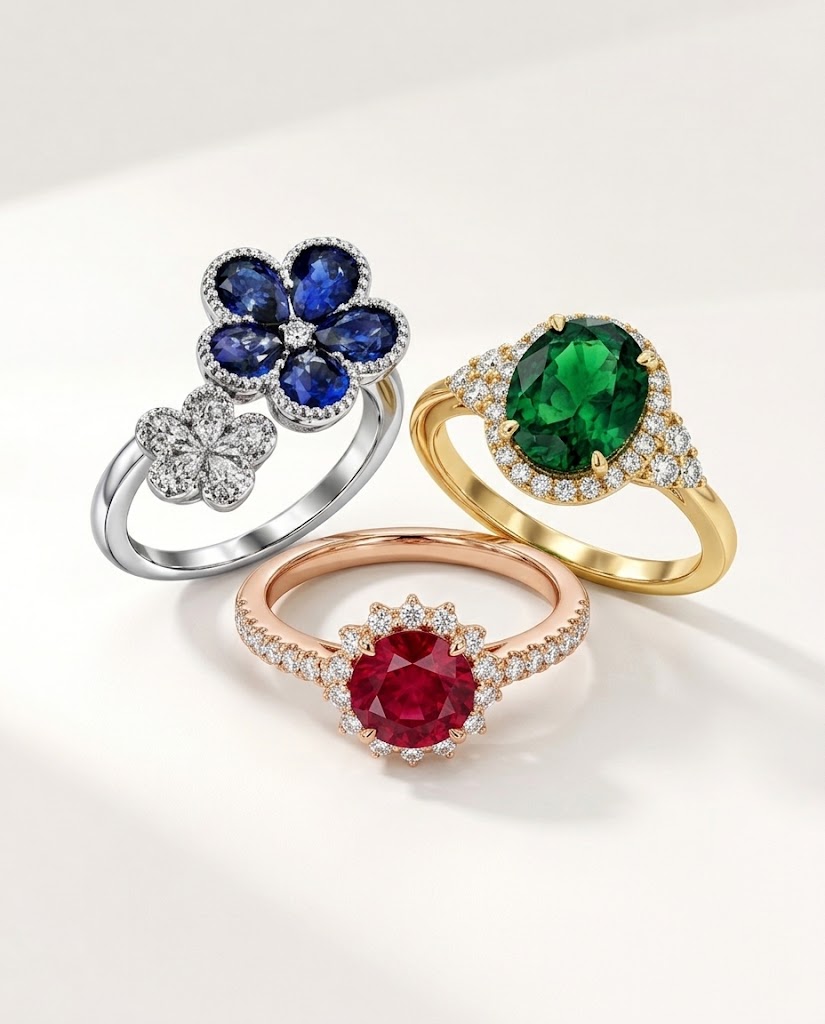
The short answer: sapphire and ruby are among the hardest gemstones there are and wear beautifully every day. Emerald has the most famous color of the three, but it is softer and needs a little more care.
Two Stones That Are Really One
Ruby and sapphire are the same mineral: corundum, a crystal of aluminum oxide. A trace of chromium turns it red, and that red stone is a ruby. Every other color is a sapphire. Blue comes from iron and titanium, and sapphires also come in pink, yellow, orange, green and white. A pinkish-orange variety, padparadscha, is one of the rarest.
Emerald is a different stone entirely. It is a green variety of beryl, colored by chromium and vanadium, and the same mineral family as aquamarine and morganite.
Side by Side
| Ruby | Sapphire | Emerald | |
|---|---|---|---|
| Mineral | Corundum | Corundum | Beryl |
| Hardness (Mohs) | 9 | 9 | 7.5 to 8 |
| Daily wear | Excellent | Excellent | Good, with care |
| Inclusions | Common; fine silk is normal | Often very clean | Almost always visible |
| Usual treatment | Heating | Heating | Oil or resin in fissures |
| Classic cut | Oval, cushion, round | Oval, cushion, round | Emerald cut |
| Birthstone | July | September | May |
Color Comes First
With colored stones, color matters more than anything else, more than clarity or even size. Jewelers judge it by three things: hue (the color itself), tone (how light or dark it is) and saturation (how vivid it is). The best stones sit in the middle: rich and vivid, but not so dark that they look black in dim light.
- Ruby: the most prized is a pure, glowing red with a hint of blue, traditionally called "pigeon's blood". Orange or brownish reds are worth less.
- Sapphire: a velvety, medium-dark blue, often called "royal blue", or the lighter, softer "cornflower" blue. Very dark, inky stones are less valuable.
- Emerald: a vivid green, pure or slightly blue. Too pale and it is classed as green beryl rather than emerald.
Clarity: Different Rules for Each
Colored stones are not graded like diamonds. Sapphires are often eye-clean. Rubies usually show something, and fine needle-like inclusions called silk can soften the color in a good way. Emeralds almost always have visible inclusions, which the trade calls the stone's jardin, or garden. In an emerald, a few inclusions are expected; what matters is that they don't cloud the color or weaken the stone.
Treatments and Lab-Grown Stones
Most rubies and sapphires on the market have been heated to improve their color and clarity. It is permanent, widely accepted and should always be disclosed. Most emeralds have their surface-reaching fissures filled with oil or resin to make them look cleaner. That is standard too, but it is why emeralds need gentler cleaning. Avoid lead-glass-filled rubies: they are sold cheaply, look fine at first, and can be damaged by everyday cleaning or a jeweler's torch.
Lab-grown rubies, sapphires and emeralds have the same chemistry and crystal structure as mined stones. They usually cost much less and are often cleaner. A good grading report from a lab such as GIA says whether a stone is natural or lab-grown and whether it has been treated.
Durability and Settings
At 9 on the Mohs scale, ruby and sapphire are second only to diamond among popular gemstones, so they suit any setting, including open prongs. Emerald, at 7.5 to 8 and with its natural inclusions, can chip if it is knocked. The emerald cut was developed for this stone: its cut corners protect it. A halo, a bezel or claws that cover the corners all add protection, as in our color fashion pieces.
Caring for Your Stones
- Ruby and sapphire: warm water, mild soap and a soft brush. An ultrasonic cleaner is usually safe for unfilled stones.
- Emerald: warm, soapy water only. Never use an ultrasonic or steam cleaner, which can push out the oil and make inclusions more visible. A jeweler can re-oil an emerald if it starts to look dull.
- All three: check the prongs or setting once or twice a year.
Which Should You Choose?
- For an everyday engagement ring: sapphire, in blue or another color you love.
- For the boldest color: ruby.
- For a vintage, statement look you will wear with care: emerald.
Every Lihara setting that takes a gemstone lists the shapes and sizes it fits. Browse our gemstones, or design a ring around any of the three in Lihara Studio.
Frequently Asked Questions
Are ruby and sapphire the same stone?
Yes, both are corundum. Red corundum is called ruby, and every other color, from blue to pink, yellow and green, is sapphire.
Can I wear an emerald every day?
You can, with some care. Emerald is softer and more brittle than ruby or sapphire, so choose a protective setting such as a halo or a bezel, and take it off for the gym, gardening and cleaning.
Are lab-grown rubies, sapphires and emeralds real?
Yes. They have the same chemistry and crystal structure as mined stones, and usually cost far less. A gem lab can tell them apart, and their reports say which is which.
Is a heated sapphire worth less?
A little less than an untreated stone of the same quality, but heating is standard and permanent. Most fine sapphires and rubies on the market have been heated. What matters is that it is disclosed.
Which is best for an engagement ring?
Sapphire is the classic choice: it is hard, comes in many colors and wears beautifully for decades. Ruby is just as durable. Emerald is the most striking of the three but needs the gentlest wear.
Related reading: The Stone Got Easier. The Design Got Interesting. · How to Choose an Engagement Ring Setting · 14K vs 18K Gold vs Platinum